Sunday, March 22, 2015

In the Ocean of Night

In the Ocean of Night was written by Gregory Benford in 1972.  Gregory is a professor of physics; as you may imagine, the science fiction he writes is of the hard variety.  So In the Ocean of Night, whats the deal with that?


The story opens in space. It is the nearish future. The earth is threatened by an approaching hunk of rock.  Only NASA can stop global devastation.  But the space rock turns out to be a spaceship.

Ocean of Night starts strong.  It has a fairly compelling main character in Nigel Walmsley: astronaut, dreamer, renegade.  The book launches right into it with its initial high stakes scenario. Unfortunately, the rest of the story never quite reaches the heights of the first section.

There are three main sections to Ocean of Night.  The first involves the confirmation that intelligent extraterrestrial life exist.  Nigels main nemesis in the section is a high level bureaucrat.

The next and longest section involves first contact.  It mainly takes place on earth.  Benford takes the time to flesh out a mildly interesting future, a future of widespread poverty, pollution, looser sexual mores. Nigel is fleshed out quite well, although for me, he never quite became likable.  Nigel is a curmudgeonly Mary Sue (a Mary Sue is an always correct character) bold unflappability is cool, but grating.  This is where the reader discovers political maneuvering the meat of the book.  Which is... OK. Its fine. The main villain turns out to be a high level bureaucrat.
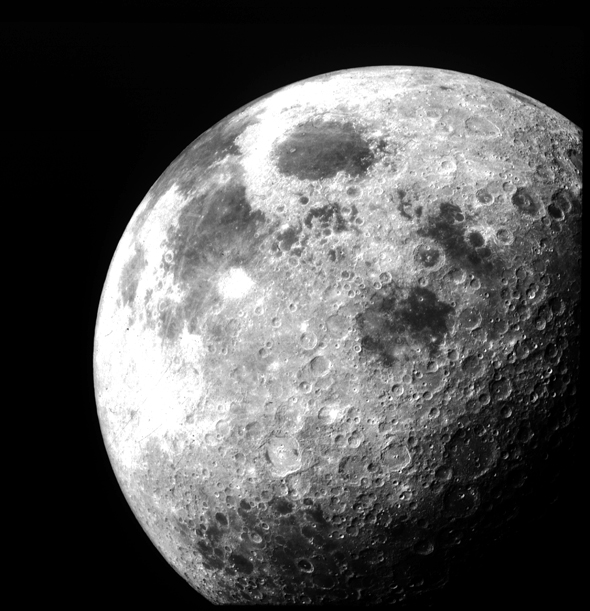
Pictured: The Moon.

The last section deals with ancient alien visitors.  It ultimately comes down to Nigel confronting a high level bureaucrat... on the moon. Also Bigfoots are 'involved' in the most haphazard "why the fuck not?" way. This last quarter the book wore on me to be honest.  The tension at this point had dwindled to basically nothing.  Data entry on the moon is pretty boring it turns out. I can forgive the hoary old trope of ancient aliens meddling with humanity.  But throwing in Bigfoot... it renders almost everything in the book retroactively cheesy and silly.

In summary, In the Ocean of Night is three quarters of an alright book.  Its written in solid style, with solid characters and conflicts.  But it never hits any true highs. Even the science fiction of it can be said to be solid without the soaring heights that the discerning sci-fi reader lives for. My verdict: you can read In the Ocean of Night and derive some enjoyment from it.  But it can easily be given a miss.

1 out of 2 space committees.


Thursday, August 15, 2013

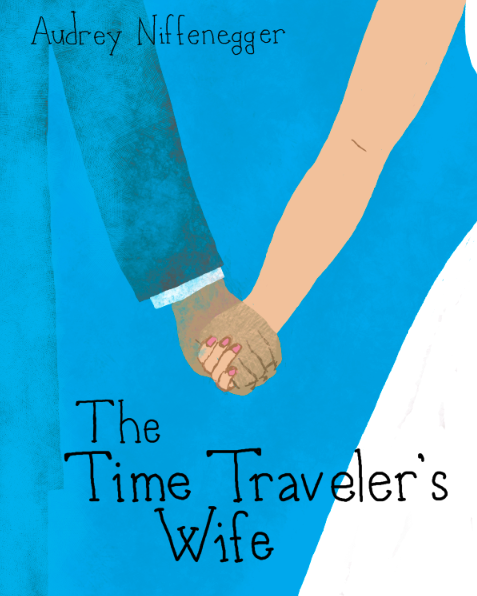
The Time Traveler's Wife

The Time Traveler's Wife, by Audrey Niffenegger, is, in fact, more romance novel than science fiction book.  It's title is quite literal: the book is about a woman married to a time traveler.  I haven't read this kind of marriage of sci-fi creativity and Literature with a capital "L" before, and overall found the book refreshing.  This uniqueness makes it fairly hard to describe The Time Traveler's Wife in a single sentence, so we'll skip straight to the meat of the review.


The eponymous Time Traveler is afflicted by practically the same thing as Billy Pilgrim of Slaughterhouse-Five. Basically, Henry (for that is his name) uncontrollably time travels to semi-random times and places. After spending anywhere from a couple of hours to a couple of days in the past (or future) he then returns to roughly around the same time and place he left. To delve too much into the details of this would be to spoil some of the best parts of the book. I will say this: Niffenegger's focus on characters and their personal struggles gives her perspective of time travel I hadn't seen before.  She obviously put a lot of thought into what it would mean for a person to pop up randomly in a different time, rather than glossing over the inherent life challenges this sort of thing would pose. We are used to seeing time travel used as a jumping off point for adventure or mind-bending explorations of the nature of reality.  In The Time Traveler's Wife being "unstuck in time" is used more as an affliction than anything else.  Indeed, in the weaker second half of the book, one could substitute time travel for epileptic seizures or some other chronic disease and it would essentially be the same story.

Which is kind of my problem with The Time Traveler's Wife.  It takes an interesting but ultimately narrow view of time travel.  By the second half of the book the author has basically said everything she wanted to about it.  From around that halfway point the focus of the story is really on domestic drama (meeting the parents, planning the wedding, moving into a new house, trying to make a baby, etc.).  The philosophical implications of time loops and destiny are basically forgotten about.  The clever twistyness of temporal clones is generally ignored.


The strength of the writing remains consistent throughout.  But there is a heavy handedness to all the characters that you notice more once the science part of the fiction begins to drop away.  The biography of the romance and life of Claire (the wife) and Henry is solid, but... not much happens?  Artificial conflict is sometimes generated, but for the most part the two of them have a fairly normal life together. Just two intellectual hipsters in Chicago, doing the best they can.  I couldn't help but feel a little underwhelmed.  The uptick in time shenanigans towards the end reignited my interest. And also proves that the narrative isn't strong enough without its central conceit.

At it's best, The Time Traveler's Wife manages to combine modern Lit and science fiction into a compelling package. But sometimes the mixture doesn't quite hold together.  The end result is, technically, a mediocre book.  But it's a mediocre book that does things I've never seen done before, which makes me feel more generous towards The Time Traveler's Wife.  I recommend it, with the caveat that the mundanity of central romance may not be what Sci-fi readers are looking for.  3 out of 4 temporal clones created!

Monday, July 15, 2013

Catching Fire

Catching Fire, by Suzanne Collins, is the sequel to The Hunger Games.  You maybe have heard of the Hunger Games. You know, the mega-popular Young Adult book. There is a movie and everything.  Honestly, have you not heard of The Hunger Games?  If so, how did your five year posting to space go?


Let's get the preliminary issues with this review out of the way first.  First off, yes, The Hunger Games and its sequels are Young Adult books.  But there are a lot of good books that fall under the that heading. Heck, I reviewed The Giver, and that's definitely YA.  I don't see any particular problem with adults reading YA books. Secondly, hey, wasn't The Hunger Games compared to Twilight at one point?  It definitely was, but I'm guessing the comparisons between the two were made either by the ignorant or as a marketing ploy.  There is not much to connect the two series.

 Given The Hunger Games' overwhelming popularity, there seemed little reason to review it for this blog.  But Catching Fire is much less omnipresent, and I figure that means there might be some room for a critique of it on the internet. So how does the sequel stack up to it's celebrated predecessor?

Fairly well, I'd say.  Catching Fire is lighter fare than The Hunger Games, but it has the same energy and verve of the original.  The main thing holding Catching Fire back is that it lacks the powerful core survival theme of the first book. The fact is, The Hunger Games didn't particularly demand a follow up. To me, any standalone book continuing its story feels kind of superfluous, no matter how well written; a problem that usually afflicts movies more than books.  Think about the movie Rocky.  Rocky is a perfectly self contained story.  It tells the gritty tale of a low life aspiring to greatness, and tells it well. Get in, get out, over and done.  But because of Rocky's runaway success, there needed to be a sequel. The problem was the core of what makes Rocky great couldn't be reused.  Rocky had won, he was a celebrity, he was cool.  So the elements that made the original movie a success (the grit, the struggle against overwhelming odds) were out. The core hook was missing, and Rocky 2 was destined to be less than its progenitor.  And so it goes with Catching Fire.

Catching Fire picks up right where the last book left off. Katniss is a big celebrity now. She and her family have a nice house and plenty of food. The central conflict of the book, then, is no longer about survival. It's about trying to maintain a facade of ditzyness.  Which for a smart, impulsive young woman, is tantamount to torture. The first half of the book revolves around this and other internal conflicts.  As Katniss is coming apart at the seams mentally, the greater nation of Panem is caught in the throws of rebellion.  This is all handled fairly well- the boilerplate prose does these long action-less sequences little good, but the filling in of so many little details and facets of the world is appreciated. Unfortunately, the down time also means that the love triangle sub-theme of the first book gets a lot more time and attention.  Really the only part of  Catching Fire I felt uncomfortable reading was the teen-girl-pandering 'which studly guy will Katniss choose?' stuff.  There isn't too much of it- the book doesn't turn into Twilight or anything- but it screams to the adult reader, "You are reading a book for teenage girls!"

Luckily the book picks up in its second half, where, spoilers I suppose, Katniss must again compete in the Hunger Games.  With the original book having already established all the basic rules and rhythms of the Games, Catching Fire has the freedom to go wild with the death-match arena concept.  Instead of focusing on Katniss's moment-to-moment solo struggles as the first book did, Catching Fire is about the larger overall strategy of the Games and group dynamics.  The Hunger Games had the problem of having largely faceless opponents, but Catching Fire is filled with colorful characters.  So yes, easily just as, if not more, exciting than the original.

Meanwhile, in Neo Nippon...

Ultimately what it comes down to is this: if you liked The Hunger Games, than you'll enjoy Catching Fire.  But it is by no means required reading. Entertaining but not essential.  Which isn't bad for any book to achieve. Catching Fire wins 9 out of 13 districts.

Wednesday, June 26, 2013

Oh Pure and Radiant Heart

*IMPORTANT: IF YOU ARE MY IN-LAWS, YOUR BOOK REVIEW IS BELOW THIS*

The title of Lydia Millet's Oh Pure and Radiant Heart should tip prospective readers off. There is a pat lyricism to the title while at the same time it mocks the atomic explosion gracing the cover. Oh Pure and Radiant Heart purports itself to be a quiet contemplative beauty while in content it more resembles a bitter 80-year old woman, screaming at the kids to get off her lawn. The sad fact is, there are many problems with Oh Pure and Radiant Heart and not much to recommend to it. So lets get into it, shall we?


The story follows Ann, a depressed hollow-eyed librarian. Ann, like the author, hates life and shambles through her existence like a zombie. Three of the leading physicists from the Manhattan Project turn up one day for no reason. These three are easily the best part of the book: each is an interesting and well rounded character. They (after endless scenes of eating out) decide that they will use their apparent second existence to press for nuclear disarmament, a noble, if fairly irrelevant goal.* Ann, like all members of the undead, crave life and latch on to the only exciting people in the entirety of Oh Pure and Radiant Heart (OPRH). They race around in increasingly boring and disjointed fashion until a flat ending.

The book that OPRH most closely resembles is The Watch. OPRH is much better written of course, and actually has several interesting characters. But the whole historical-figure-inexplicable-recreated-in-the-modern-day thing is there, and they share the same goal of serving as platforms for their respective authors' facile liberal elitism. I'm a pretty liberal dude, and I have nothing against social commentary, but Millet's grudge against the modern day seems limited to nebulous complaints about people these days being crass, not caring enough about issues, something something, whine whine. The majority of her direct examples of society's breakdown seem to boil down to the fact that poor people are gross, and stuff made for poor people is ugly.

That nastiness is really what is at the core of OPRH, once you've stripped away the flowery words. The author hates people. Poor people, rich people, hippies (which is weird since who cares about hippies anymore?), Evangelicals- Millet hates them all. She hates any location on earth that does not contain breathtaking beauty.  She has turned her back on the world and then writes a book full of ennui.

OPRH is full of poetic images. Longing suffuse the book. But the ugliness of the characters and the setting consistently undermine the prose. There is a larger problem with the style though. It follows a strict formula, and never breaks from it. The effect over time is maddening. Every. single. passage. must end in some poignant pungent statement. IE, Thirty thousand dogs are killed each year.
...
A dog, in the throes of joy, may bite a dick.
...
A dick can just as easily wound as it can be wounded.
...
Don't be a dick.
...
Et cetera, etc.

Nom nom nom

You may have gotten the sense over the course of this review that I did not enjoy Oh Pure and Radiant Heart. You would be correct in that assumption. Um, don't read this book. 0 out of 3 dead physicists awarded.

-----------------------------------------------------------

Special review for my parents-in-law

Oh Pure and Radiant Heart is a beautiful book, full of deep feeling and powerful thought. Lydia Millet has gazed into the soul (or lack there of!) of modern society and artfully illuminated it's ills. It is a deep book, funny and somber at equal turns. Two thumbs up!


*While the nuclear disarmament of unstable extremist countries is very relevant to the modern day, the disarmament of the US doesn't seem like a priority. There is about a 0% chance the US will ever use the bomb again. Too much bad PR.

Tuesday, June 25, 2013

The Handmaid's Tale

A crass but honest way of describing Margaret Atwood's The Handmaid's Tale would be to say it is 1984 for women. While I don't like to think of books being FOR only one specific gender, I cannot ignore my own discomfort when reading The Handmaid's Tale. The fact is there is a certain sub-genre within literature that deals primarily with women's issues; that has a heavy focus on child birth, menstruation, and the inhuman alieness of men.  As a guy, I can read something like The Red Tent and get something out of it (like a bout of depression roflamao), but there is an unshakable sense of being an intruder. Is the feeling a societal construct?  Subconscious misogyny? Interestingly, I experienced no such discomfort while reading Analogue: a Hate Story. Despite the fact that it is very much alike to The Handmaid's Tale and The Red Tent in that its plot revolves around women trapped in a despotic patriarchal system.  Perhaps because A Hate Story saw fit to include multiple male perspectives.  But I digress.


So what is the Handmaid's Tale like?  There is not much to the plot, and virtually no characters beyond the narrator. Like 1984, Handmaid's Tale is most interested in introducing and building up a horrifying near future dystopia. Handmaid's Tale is a sort of alternate present where Evangelical Christians have toppled the US government and instituted a brutal theocracy in the vein of modern Iran. Much of the book is spent exploring attitudes, power structures, and day to day life in a tyrannical imitation of biblical times.

The pacing of the book serves it well. The first third of the story feels out the new surroundings cautiously, laying each new revelation like a brick in an unassailable wall. The narrator is part of a new caste of women- ones whose sole purpose is to bear children. Imperceptibly the pace quickens with each new chapter. This is a book that takes a long time to get any real plot but it is gripping all the same. And as the narrator becomes more accustomed to her new world things start moving faster and faster. The monolithic theocracy begins to show cracks. As in 1984, everyone in Handmaid's Tale seems to hate their system and yet are totally trapped in it. But as The Handmaid's Tale barrels towards its conclusion, the instability of the system is apparent. People can grow used to almost any hardship, and this sense of familiarity, of knowing the rules, can lead to foolhardy boldness.

This probably sounds pretty awesome. But there were times when I just had to stop reading the Tale. It is not an easy read. And the constant focus on child birth becomes a little trying. The Tale can't go a page without some obvious symbolism alluding to ovulation or birth. Atwood manages to portray the main characters feelings of being smothered by an overbearing government a little too well. The claustrophobia one feels when reading the Tale can become overwhelming sometimes. And in a minor quibble, the setting is not well served by having the fall of the US take place in less than a year. The intention no doubt is to shock by contrasting the fact that all the women in the book are modern educated people rapidly devolving to a medieval state. It makes the whole thing seem kind of ridiculous though.

An America that can give us feminist Ryan Gosling could never fully submit to the Patriarchy.

I recommend The Handmaid's Tale with reservations. It was not the most pleasant read. But it was quite well written. It lacks 1984's creativity and power. But Handmaid's Tale has closer real world analogues in Middle Eastern theocracies. Read it if you feel like being bummed out I guess. 1 out of 2 stillbirths, sigh.

Sunday, June 9, 2013

Snow Crash

Snow Crash, by Neal Stephenson, technically falls within the sub-genre of Cyberpunk. It contains the necessary elements: virtual reality hackers, a fascination with Japanese culture, a gritty dystopia. I feel a little uncomfortable putting Snow Crash in that box though. Snow Crash constantly subverts and toys with the rules and conventions of noir. For god's sake, the main character's name is Hiro Protagonist. Like Slaughterhouse Five, Snow Crash is bigger and better than any labels that could be attached to it. It may not be great literature, but it is a great read.


Perhaps the best way to describe Snow Crash is listing what the author prioritizes in writing it. Stephenson's first and foremost concern is humor. Snow Crash isn't quite out and out wacky like a Terry Pratchett novel, but it is basically hilarious. The next most important thing in Snow Crash is being cool. There is just a lot of badass stuff in the book, enough that the characters sometimes actually comment on it. Which leads us into the tertiary goal of Snow Crash: crazy bombastic action. Finally, surprisingly, Snow Crash is about fascinating hard science fiction with a core of thoughtfulness that serves as ballast, keeping the lighter parts of the book from drifting off into the realm of pure fluff.

The story revolves around Hiro Protagonist: hacker, swordmaster, pizza deliveryman. He is drawn into an ever expanding fight against a new drug called Snow Crash. He races through a fun setting where each suburb is its own little country; populated by rad skate punks, the Mafia, and cyborg doggies.  To go into more detail would spoil the enjoyment, so I'll leave it at that. I will note that the book came out in the early '90s and has a sort of undefinable '90s attitude to it. Snow Crash, like many sci-fi books, extrapolates a future out from it's own decade. So the obsessions of the 1991 are all touched on, the malls, the fresh 'tude, the burbs, etc (think the movie Clueless). What can I say, it was an innocent time.

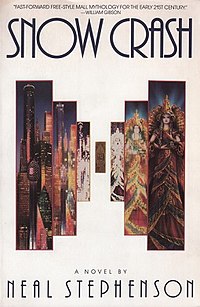
Snow Crash is kinda like this!

If it wasn't clear from the review, I loved Snow Crash. The humor, the action, the science- it all worked for me. This is the part where I always quibble but I've got to say, I'm really scrounging here. Um, the end was kind of abrupt? The characters kind of rely on the reader to sketch in their personalities a bit, maybe? I don't know, it was great, everyone should read it. 14 out of 15 boats destroyed!


Sunday, June 2, 2013

Do Androids Dream of Electric Sheep?

Do Androids Dream of Electric Sheep?, by Philip K. Dick, is a fairly well known book. But that does not mean it is necessarily mean it is widely read.  I'm guessing a good portion of its fame comes from being the inspiration for the classic sci-fi movie Blade Runner.  While the book shares the main plot framework as Blade Runner, they are very different beasts. The movie is a melancholy cyberpunk thriller, the book... well Do Androids Dream of Electric Sheep? (DADES) is a violent acid trip bursting with strange ideas.


There is a dream like quality to DADES that caught me off guard. The whole book is like a vivid nightmare. There is an alienness to the post-apocalyptic setting and characters. Conversations veer off in totally unforeseen directions. Time and again the nature of reality is called into question. The facts never seem to quite add up, incongruities abound to trip up careful readers. It is all wholly engaging while simultaneously exhausting.

The story follows a bounty hunter, Deckard, on One Bad Day(TM). His job is to hunt down six advanced killer androids, recent escapees from Mars. These androids are virtually indistinguishable from normal humans- except that they lack empathy. What follows is a bizarre cat and mouse game, complete with a femme fatale, an extra-dimensional psychic entity, and a goat. Dick throws in a lot of  random world building stuff, all of which do relate to the central theme of human empathy. Some of it doesn't work, sometimes element of DADES don't quite mesh. But overall I was quite taken with the messy yet fascinating world of DADES.


Special note must be made of the stars of Do Androids Dream?: the androids themselves. Minor spoilers follow. The androids are basically humans without empathy and we have a word for humans lacking empathy: psychopaths.  The android characters attempt to blend in, but time and again their alienness shines through. It's hard to overstate how well they are written. The androids are at once repellent and terrifying, and simultaneously completely fascinating.  In Blade Runner, androids are noble escaped slaves, full of passion. I much prefer the androids of DADES; the frustrated, brutal, devious killing machines.

Do Androids Dream of Electric Sheep? is a fine book, one that fully deserves it's fame. It also will not work for some people. I can see the fever dream world in which it is set turning people off.  And as noted, DADES's more surreal elements don't always fit nicely. There are part of DADES written tightly as a drum, it draws attention then to certain slack scenes.  Those quibbles aside, this is a great book, one that rewards close attention and further thought.  Do Androids Dream of Electric Sheep? scores 9.2/10 on the Voight-Kampf test.

Monday, May 13, 2013

The Black Sun

The Black Sun by Jack Williamson reads like a classic sci-fi story. It has the bland characters, stolid prose, plodding pace that are the hallmarks of the golden age of science fiction. The Black Sun was actually written in 1997 though. I think we can excuse the datedness of book since Jack Williamson is in fact one of those golden age writers. He's still going after seventy years of writing!  I was confused by the praise for The Black Sun inside the cover. But how could reviewers slam a Jack Williamson book? Jack Williamson created the term "genetic engineering"! What have you done with your life!? Nothing!


So anyways, The Black Sun is not very good. As I implied above, it's characters are simple constructs: generic good guys, cartoonish bad guys, adorable moppet children/creepy possessed children.  I'll give Williamson credit where its due, he creates tragic pseudo-literature style backstories for everyone. The problem is these poignant flashbacks are delivered in an artless expository style that failed to connect emotionally with me. One gets the sense that the author is really trying to create interesting complicated characters, but something tells me this isn't a Williamson strength. But The Black Sun's problems go beyond the flat characters.


The plot has issues too. The main one being that Black Sun's story is one that has been told many times in science fiction- and with more verve. Tell me if this sounds familiar: a group of space explorers, trapped on a mysterious dead alien world, within the cyclopean catacombs comes the stirrings of something deadly.  The most recent example of this story comes in the form of the movie Prometheus. As in Prometheus, sometimes the characters react in bewildering ways. Prometheus had a xenobiologist run away upon discovering a dead alien as opposed to wanting to study it. The brave space pioneers of The Black Sun immediately assume a rainbow beacon from aliens is some sort of warning and attempt to avoid contact at all costs (their idea of exploring alien ruins is to drive up to buildings and then freak out and run away like eight year olds daring each other to go into an abandoned house).

The setting of The Black Sun.

So no, I cannot say I enjoyed The Black Sun too much. It has its moments, and towards the end it starts being straight up compelling. But it was too little, too late.  If you are a fan of golden age style sci-fi then The Black Sun may be for you. But for the rest, you guys can safely give this a miss. The Black Sun receives 4 out of 7 strange black beads.

------------

Spoilers for the end of the book follow.
The end of The Black Sun presents an interesting scenario. The surviving colonists form a sort of alliance with the psychic spirits that haunt the planet. The author presents this partnership as a happy ending. But it is in no way an equal relationship. The alien spirits seem to feel free to possess humans whenever they like. The spirits don't tend to have much regard for their host bodies either. An alternate reading of the ending, one that goes against the authors intent I'm sure, is that colonists are/will be slaves of the alien spirits- convenient bodies for them to inhabit. There are some details in the text to support this reading as well.

Excession

I thoroughly enjoyed Iain Banks novel, Excession.  It's packed with fun, interesting ideas and theories.  The characters are all weirdoes, and the plot is unpredictable. On the flipside, Excession isn't for everyone. It is a meandering book more interested in world building than any action. So, a dilemma. I think the best solution is to describe the book, its strengths and weaknesses, and let you, the reader, decide it's overall merit.


Excession is part of a loose "series" called The Culture. It is not so much a series as a setpiece- the only thing Culture novels have in common with each other is the setting. I didn't have any problem with Excession as a standalone book. I should note though that I had skimmed the Wikipedia entry on the The Culture before hand, so I had at least some familiarity with the setting. Excession is very much a book about the galaxy bestriding civilization called The Culture. To such a degree that ones enjoyment of the book is directly linked to ones enjoyment of The Culture. So what is The Culture?

Essentially, The Culture is the Federation from Star Trek. Simple as that really. They have similar levels of technology- transporters, replicators, forcefields. Both the Federation and the Culture are post-scarcity multi-species utopias (so no money, no real property ownership, society bound together more by empathy than physically enforced laws).  As utopias, each civilizations' overall striving are now directed outwards; having solved all their internal problems, they seek to solve the problems of other civilizations.  Star Trek's Federation places a greater emphasis on exploration, the Culture places the emphasis of its expansion on fostering progress and enlightenment. Both civilizations pride themselves on having the moral high ground.

Blood brother to Excession?

So how can Excession be about an entire civilization? Two ways. First is that the titular Excession is one of those classic sci-fi 'mysterious alien artifacts of immense, but unknown power.' It's discovery sparks off a Culture wide crisis. So the main plot is about how the Culture reacts to an unprecedented danger/opportunity. Basically, shaking the civilization and seeing what drops out of it. The book is a series of interwoven short stories from a multitude of perspectives- each at least tangently related to the main plot.  The characters in the Excession are meant to represent the Culture as a whole- there is a broad variety of them each illustrating a different facet of the Culture. In this way Excession manages to portray the overall civilization.

I loved this stuff. The writing was smooth, the book moves along at a steady clip. And the world of Excession is just a lot of fun. It didn't bother me that Excession is also incredibly dense, loosely plotted, with many a one-note character. Who cares if a character is cartoonish, if that character is a conspicuously ghoulish vigilante who just so happens to be a sentient dream-stealing spaceship?  That is awesome.  Actually, there is plenty of humor in the book (I particularly liked the names of the Culture warships).  I heartily recommend Excession, unless all the stuff I described in my review seemed lame to you in which case I don't recommend it.  8 out of 11 stars or 4 out of 9, if you don't think it sounds good!

Sunday, April 21, 2013

Starship Titanic


Starship Titanic is a sci-fi comedy written by Douglas Adams (of the Hitchhiker's Guide to the Galaxy) and Terry Jones (of Monty Python). That is some fucking pedigree right there. Starship Titanic is also an adventure video game.  In fact, the book itself is merely an adaption based on the game, something of a rarity before 2007.  All books that are adaptions of video games or movies are kinda crappy- it is an immutable law of the universe.  For an example, feel free to check out my review of Halo Cryptum. Accordingly, the best Starship Titanic could hope to be is pleasantly readable.

Starship Titanic is a pleasant read.

It has some chuckles, but the the book is willfully slight. Even for a humor book, Starship Titanic is light on conflict, compelling characters, ideas.  At a little more than two hundred pages (with big font) Titanic wasn't written with big ambitions in mind. But for what it is, it is fun.  The pages slip by at a good clip, although the plot is weirdly lumpy. The characters, of whom there are quite a few, each have their own personal character arcs, a nice touch. The video game scaffold of the whole thing only rarely shows- mostly in various item collection subplots.

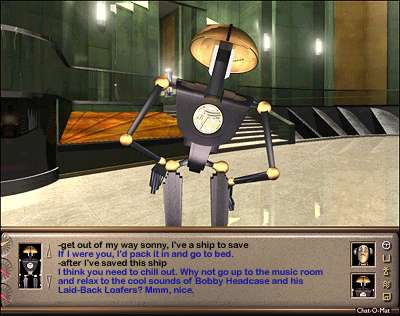
From the game.

Because of the insubstantialness of Starship Titanic, I struggle to find more words to describe it. If you are looking for a little more Douglas Adams style comedy, pick it up. It doesn't take too long to read after all. But Starship Titanic is by no means an essential. For that reason, it only recieves 5/7 cerebral arteries.

Sunday, April 7, 2013

A Small and Remarkable Life

A Small and Remarkable Life, by Nick DiChario, is an interesting book.  It is a science fiction novel in the style of the movies E.T. or Batteries Not Included. You know, the type of deal where a charming/cute naive little alien teaches us all a lesson in life, laughter, and caring. On a side note, I find it weird that there is this entire sub-genre of life-affirming-cute-aliens stories. Why not life affirming manatee-men? Or maybe tiny rapping dinosaurs that wear cool shades?


ANYWAYS, A Small and Remarkable Life is in fact a twist on this type of story. The book is set in the mid-1800s, in an America that has yet to be domesticated, civilized. Although much of the book takes place in upstate New York this is not a gentle pastoral tale. It is a bloody story, filled with hard men, frontier justice, and mercy killings. As one can imagine, the collision between the brutal setting and the lovable little magic alien makes for an interesting conflict.

And a A Small and Remarkable Life succeeds. For what it is worth, the book is positively packed with both ignorant people living hardscrabble lives and a little guy who can heal both bodies... and souls.  I'm just not sure the conflict of tone is enough to sustain the whole book. While the setting and writing shines, the plot feels slack, empty in a way. The alien, Tink, is born, has a ton of traumatic encounters, dies. Tink forges no great friendships with anyone. And while he ends up helping some people, most of the inspiring stuff happens "off screen."  There are themes: the nature of the soul, the nature of mercy, etc. there isn't any real message, just sort of a muddying up of philosophical waters.

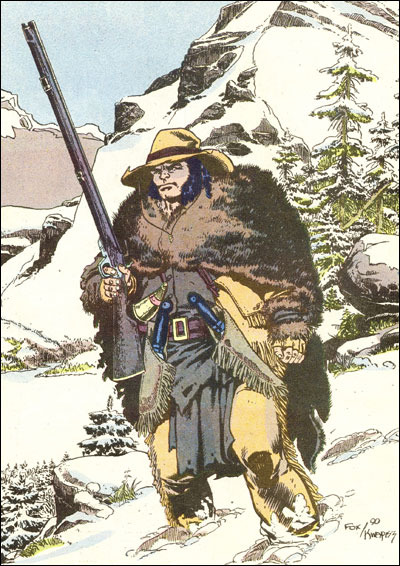
Wolverine of the X-men makes a guest appearance in the book.


Despite its short comings A Small and Remarkable Life is worth a read. Its short enough that you could read it in one sitting, even if you don't find it quite to your taste, as I did. And the prose is clear, the atomsphere is strong, the characters are multi-faceted. Its hard to argue with that. A Small and Remarkable Life recieves 2 out of 3 prize jams.

Disclaimer: Wolverine isn't in A Small Remarkable Life. That was a lie.

Monday, March 18, 2013

Lord Valentine's Castle

Lord Valentine's Castle, by Robert Silverberg, is a fluffy book. You can tell just by judging it's cover. There is a handsome man wearing tights and a half-cape juggling. Some doofy looking aliens are hanging out in the background. Throw the fruity title into the mix and... well the book isn't a journey into the dark heart of humanity, lets just say.

Just look at that goofy son of a bitch!


But you know what? That's fine. Silverberg no doubt set out to make a light adventure novel, and he succeeded.  Because the world needs light frilly fantasy. Hell, I need a frilly fantasy, from time to time. This past month is one of those times. Those of you who have been following the blog may have noticed I've been reading weird slog after weird slog.  Lets just say I needed to read a book that actually had a concrete plot and relatable characters. 

Lord Valentine's Castle follows the adventures of the amnesiac wanderer, Valentine. It quickly becomes apparent that there is more to Valentine than there seems; and to the credit of the author there is no attempt to make the 'twist' of the first part of the book seem shocking. No, in Lord Valentine's Castle the emphasis is always on the journey. The plot is almost shockingly straight forward. The details and thoughtfulness is instead lavished on the setting. Descriptions of mighty cities, of strange forests, and bizarre creatures fill the book. The mechanics of the world of Majipoor are gently explored in interesting exposition asides. Majipoor is a paradise world full of wonders big and small (mostly big though).

This is unrelated to Lord Valentine's Castle.


The downside to this world building is twofold. First, the plot could have used a little bit more spice. Valentine decides on a straight forward plan of action and it goes off without a single hitch, exactly as it was expected to. Second, the characters are on the anemic side, dwarfed by the size of the world and their monumental task. Which was frustrating, since each character introduced has some fascinating hook to their person that hints at greater plot/character potential. 

Lord Valentine's Castle is a smooth, compulsive read. For a book so full of exposition it only rarely drags. But it is also a big book and by the end the hollowness of Valentine's Castle began to gnaw at me.  There is no great ethical dilemmas, no heated character moments, none of the tension of greater literature. No humor, no cleverness, no message. But Lord Valentine's Castle does have inspiring imagination and the promise of endless new adventure around every corner. Which makes for a pretty good time!

Lord Valentine's Castle receives 39 of the 50 cities of Castle Mount.

Wednesday, February 6, 2013

Analogue: A Hate Story

You are a deep space explorer. You have been hired by a Historical Society to investigate a recently discovered derelict space craft. It is an ancient colony ship from the pre-FTL (faster than light) days. Uncover the final fate of a bizarre lost society.

Analogue: A Hate Story, by Christine Love, is not a standard book. It isn't a book at all in fact. It is whats known as IF, Interactive Fiction. Interactive Fiction is exactly what it sounds like: they are stories you interact with, generally through text commands. The player/reader has some amount of control over the story. If Analogue is a video game then why am I reviewing it? Well I feel like it mostly meets the criteria for a short story. This is a "game" in which your primary action is to read old diary entries. While the player/reader has some input in the game Analogue is mostly a linear experience. What I'm saying is that Analogue is practically short story- just instead of turning pages you navigate computer menus.


Analogue is, at its core, a detective story. The reader is the investigator. You slowly but surely unravel a brutal tale, told in snippets and rumor. The ship's AIs are your companions and helpers in this task. I should note that AIs in Analogue are fully sentient and have their own personalities. Hyun-ae, the ship AI, is a sweety. She is a particularly well drawn character. Mute is a bit trickier to describe but also interesting. The diary entries you pour over have their own sets of interesting characters. Reading through the private dreams and desires of the colony ruling class really makes life onboard the ship come to life. Obviously, there is a limit to what I can say without spoiling the story. Suffice to say it is both powerful and dramatic, providing the reader with moments of pure enjoyment. By relying on player agency, the reader really becomes drawn into the unfolding story.

I do have some quibbles with Analogue, of course. The setting, a massive dark tomb-ship is underused. Since the entire game takes place on a computer screen it can be easy to forget what the setting is. Never seeing (in either still image or even textual description) the setting blunts the dramatic impact of the mystery.  Also, the story takes awhile to pick up steam and momentum can occasionally be killed if you are stumped on something.

In conclusion, Analogue is a good read and an interesting experience. I recommend it to anyone adventurous enough to step out of their comfort zone. Don't be scared off by the anime style. While the author is a obviously a fan of anime, Analogue is an accessible story; and the juvenile tendencies of anime don't crop up. Analogue receives 78/100 journal entries. You can find it here.

Sunday, February 3, 2013

The Sky Lords


Oh, The Sky Lords. You are a silly silly book. Not on purpose mind you. Indeed, The Sky Lords takes itself very seriously.  But all the same it is jam packed with fun concepts like talking panthers, post-apocalyptic amazonian societies, and insane killer cyborgs.  With all that and more, of course I enjoyed reading The Sky Lords.  But I would caution that it is not some sort of hidden gem. It's a dour and flat read.

The Sky Lords is set in a post-apocalyptic world in which genetic engineering run amok has all but ended human civilization. Most of the wilderness has been lost to a fungal blight and insane monsters created by science run amok. Those civilizations that remain follow the standard for post-apocalyptic societies- regressed to a brutal medieval level with only a few pieces of technology still understood and maintained.  One by one towns succumb to plague or genetically engineered monsters or warfare. While ground based towns have no way of attacking one another there are marauding zeppelin cities (the titular Sky Lords) that sustain themselves off tribute from the ground dwellers. As you can tell from my description it is jam packed setting. (Although it bears quite a few similarities to the anime Nausicaa of the Valley of the Wind.)

A Korean trailer for you!

The plot follows the trials and travails of Jan, last of the Amazons. Yeah, this book is cheesy as hell like that. I want to avoid spoilers so I'll avoid getting into details. Suffice to say, Jan spends most of the book simply trying to make the best out of a series of bad situations.  Despite the occasional time jump, the plot is very linear. It follows the pattern of "this happened, then this happened, then this happened." The Sky Lords isn't badly written but there is an artlessness to the prose that makes the whole thing feel rather flat. The book does pick up at times. The only other character of note in the whole book is a mysterious man named Milo. Milo is a complicated, interesting character and the book's best moments generally center around him.

Ultimately, I feel a little frustrated by The Sky Lords. It had the potential to be a really fun book. I mean, the setting alone is golden. But plot is unrelentingly grim and methodical. Although it sounds sappy, I think what The Sky Lords is missing is heart. It is full of toys but refuses to play around. For that reason I reluctantly give The Sky Lords 6.7 out of 10 samurais on gliders.

Thursday, January 24, 2013

Rogue Star


As you should be able to tell from the (frankly amazing) cover, Rogue Star by Friederik Pohl and Jack "The Thunder" Williamson is hella pulp. This thing is old, and wild.  Rogue Star has trippy aliens, a damsel in distress, and a love-conquering-all ending.

Unfortunately I'm kind of over selling it.

The book follows creation and growth of an artificial solar intelligence. In the far flung future mankind has joined an interstellar community of billions, including sentient stars. The science here is sketchy at best- and not really the point. The point of Rogue Star seems to be just luxuriating in an unfathomable future and delivering the goods on its fun premise. The main plot, the menacing ascension of the infant rogue star, is the high point of the book. The rogue is kind of like a superpowered ghost. Through manipulating the invisible forces of physics the rogue can consume energy/mass and thus possess machines, animals, and eventually planets. It is confused and animalistic, but its mighty alien intellect grows exponentially in the space between picoseconds.

The story wrapped around the rogue star's is less exciting. The book follows a clutch of characters drawn into the growing disaster. The problem is twofold. The characters are not terribly compelling. The hero, Andy Quam, is supposed to be a quiet nice guy. But he comes off as kind of insane. His obsession with his old ex-girlfriend overrules everything for him. And when I say everything, I mean he doesn't particularly care about the fate of Earth and billions of lives when weighed against his goal of seeing his ex again. The ex-girlfriend, Molly, may be super nice and really fun to be around- but we'll never know since literally every one of her scenes in the book is her being blown up, knocked out, passing out from smoke inhalation, being terrorized by Sleeths, being terrorized by sentient stars, being exposed to the vacuum of space, radiation poisoning, headaches, paper cuts, etc. The cover of the book promises a nubile young woman being menaced by a strange alien. Well Rogue Star fucking delivers. But it never really introduces us to who Molly is.

The other issue with Rogue Star is that, just as Andy seems 'off' in his actions and reactions, the entire universe feels off-kilter and hard to understand/empathize with. It just didn't click with me. The half abandoned Earth, the zombiefied citizens, the maddening bureaucracy encountered at every turn- it feels like Pohl and Williamson were trying to say something or make some kind of point. But what is more likely is that it simply isn't very well crafted.

So where does all this leave Rogue Star?  Read it for the evil sentient stars. But don't expect to be too impressed by anything else. Rogue Star receives six of ten stars.

Saturday, January 5, 2013

Against the Fall of Night

Against the Fall of Night, by Arthur C, Clarke,  is not a book for everyone. It is classic science fiction for better or worse. Like most sci-fi from the 50s (although it was technically written in '48), Against the Fall of Night is filled of grandiose visions and big big big ideas. Also like the sci-fi of it's time, the book leaves something to be desired when it comes to characters and actual plot. Clarke was obviously mainly interested in delivering a compelling and fascinating setting. The plot then is a basic "boys' adventure" book, a simple device through which to explore the world.

The cover of the magazine that ATFON originally appeared in.

So Against the Fall of Night is about a precocious boy who goes on a wild adventure. The stakes are decidedly low, and while there are obstacles to be overcome, the book never manages to be exciting. Where the real action is is in the setting. ATFON is set over a billion years in the future. It is set in a city so marvellous that, even though its inhabitants are immortal, they never exhaust it's wonders. And the plot moves from grand location to grand location. It took humanity less than 100,000 years to master the Earth- ATFON asks us to imagine how much more we could create given 100 million years. For one thing, if it takes humanity less than 100,000 years to produce the Mona Lisa imagine how many Mona Lisas there will be in a billion years. More Mona Lisas than even an immortal would have time to go through.

ATFON's large scale is the best thing it has going for it. Unfortunately, it also hampers reader engagement. It's hard to be drawn into a story that has such enormous distance in it. ATFON's subjects are too large for it to draw close to and so the story ends up feeling weirdly clinical and cold. Despite that the book is a quick read and fairly interesting in spite of itself. Against the Fall of Night recieves 589,034 of 100,528 alien races banding together to form a Galactic Empire.

Monday, December 17, 2012

Halo Cryptum

Halo Cryptum is one of those books I read because it was the only book around at the time. While I have played several of the Halo games, I disdain cash-grabby book tie ins to popular franchises. One thing that interested me about Cryptum is that it is written by Greg Bear, a distinguished award winning science fiction writer. What would/could an author of proven quality do with the anemic and juvenile "world" of Halo?


First: a little background into the actual Halo series of video games. The Halo games are Hollywood action movie blockbusters. They are not intended to provide compelling characters (the main character is basically mute and faceless). And the setting is aimed at having the broadest possible appeal. Therefore, instead of creating new and unique aliens, Halo casually repurposed the aliens from the popular computer game Starcraft. Given that Halo is about a space marine running around gunning down evil aliens all this is fine. But nothing about Halo is particularly deep or interesting (to me anyways).

Bear sidesteps a lot of the problems of writing a Halo book by setting Cryptum tens of thousands of years in the past. Because of course Halo has that old hoary trope of ancient god-like aliens who left ruins filled with a secret, dangerous power. Cryptum is something of a novel premise then: it is set at the height of the galaxy-wide hegemony that left its moldering mark upon the universe of Halo. It's actually something that I have never seen attempted before. For a good reason I think. The big draw of the cliche is the mystery- the feeling that the full story of the bizarre alien artifacts and the mighty power that made them can never truly be known. Part of the allure is the power of the civilization that made devices so incredible that they have endured both the passage of time and their own creators. Setting a story in a civilization so advanced and powerful is problematic. Likewise, coming up with a believable apocalypse is tricky. Then there is the problem of scale, how can a character get ringside seats to the end of days and still get across the size of the event. Finally, the main character and his people are doomed, totally doomed. The reader knows that no matter the heroics of the characters they will fail.

Not appearing in this book!

Greg Bear handles these challenges with a varying degree of success. The Forerunner's (such a name for a doomed race!) culture is intriguing but its hard to get a handle on their exact capabilities and day to day life. Rather than spend the book world building, the plot races from location to location providing the information necessary for conflict; but leaving the setting weirdly sterile and blurry. I suppose it was too much to ask for a sociological breakdown of super aliens in a franchise tie in book though.

The story is (in what I think is a pretty bold choice) a coming of age story. It follows the journey of a young adventurous Forerunner as he... gets swept up in a giant crisis? Because of that damn hazy setting its hard to really feel the full force of the threat of the disasters menacing the Forerunners. The reader isn't invested in the Forerunner civilization- how could we be invested in something we know so little about. And where are the humans? Humanity is basically window dressing in this story. And where is the Halo franchise in all this? Well there is powerful robo-armor and blue lady AIs that live in the armor. ...just like Halo! The two evil aliens from Halo make a cameo appearance. Beyond that Cryptum is practically its own beast.

If all this kind of sounds like a mess that's because Cryptum is a mess. It can be an interesting read at times. Enjoyable even. But ultimately its just too muddled for me to really recommend. I guess if you are a huge Halo fan you could read it. Halo Cryptum receives only 5 of the original 12 Halo rings.

Saturday, December 15, 2012

Spin State

Today's book is Slip State or Spin Gate... possibly Star Slip. Spin State's forgettable title heralds an equally forgettable book. Spin State (by Chris Moriarty) isn't necessarily bad... but it is a far cry from a good sci-fi book. Let us examine it's sins below.


The book is set firmly in the cyberpunk genre (for those of you just tuning in cyberpunk marries the atomsphere and story beats of Noir with high flying sci-fi). I'm on the record as being a big fan of cyberpunk but Spin State did not sit well with me. The main character is Catherine Li, a tough, jaded soldier with a dark secret past. Which is standard for the genre. Why then did I find her so unlikable? To me, she seemed less  "hard ass" and more "high strung." And rather than existing in a state of moral ambiguity, Li just seems confused.

The setting had the same problem. Spin State's universe is a place of dirty deals and corruption. Of slums and harsh lives. Once again, standard for a Noir setting. But I found atmosphere annoying rather than cool. The author goes out of his way, clumsily, to hammer home the cynical nature of the world.

Spin State is kind of like this except that it's bad.

The plot itself is about a murder investigation that quickly gets tangled up. Everyone has an ulterior motive, and mysterious clues pile up quickly. This is pretty standard for detective stories. It's one of the reasons I like Noir. But in Slip State it simply makes the story feel muddled and bloated.

What it all comes down to is that Slip State just isn't written very well. There are all sorts of little things in it that nag me. Like when Li yells at an idealistic rich kid for trying to help poor miners. Or everytime Li is verbally or physically attacked by a cop technically under her control and does nothing to reprimand him. Li's  ambivalence towards people who try and kill her in general. So while I'd like to recommend Spin State I really can't. It receives 4 stars out of 10.

Saturday, November 10, 2012

Bonus Mini-Review: The Giver

The Giver, by Lois Lowry, is read by tens of thousands of middle schoolers each year. It is by no means obscure, and thanks to it being on the reading list of many an English classes, there has probably been more words written about The Giver than there are plankton in the sea. What I want to focus on is the language of The Giver.


In The Giver, humanity has solved all the problems. All of them. But not without a heavy cost. A perfect tranquil existence has been obtained only by draining people of their history, of their passions, and of their freedom. The whole world has been reshaped to reflect this uniform, sterile society. This is not to say everyone is an identical zombie. People superficially feel emotions and they have all sorts of different jobs based on their personalities.

The book is written by a young teen, Jonah, who is a regular member of this utopia. The way he thinks, the conversations he has, all reflect the pleasant flatness of his community. Usually, flat dialogue is something to be avoided, but in The Giver the text is chilling. People talk like a careful ten year old laid out each of their words . Even the wisest person on the planet, the man burdened with the collective history of mankind, talks in the same polite complete sentences. And not by accident. Precision in language is drilled into all members of the community at an early age. More than any exposition in the book, the way the story is written gives us the most detail about the setting.

In a way, the language of The Giver is similar to Newspeak in 1984. Newspeak is a recent invention in 1984 created as a sort of linguistic thought control. It is a dumbing down of language so that eventually people will no longer be able to express complex ideas. Newspeak is in it's infancy in 1984 and not very effective- after all the main characters seem to have no trouble expressing philosophical principles. The Giver gives us view into a world that has been using Newspeak forever. In The Giver no one needs ever have a conversation about vague topics such as politics or ethics. Their language is one of perfect clarity where wishy-washy concepts are difficult to express. Because everyone is taught to use unambiguous language they end up thinking unambiguous, uncomplicated thoughts.

Love is impossible to precisely define. So love does not exist in the world of The Giver.

Wednesday, November 7, 2012

Riddley Walker


Riddley Walker, by Russell Hoban, is not a book to pick up casually and read in an afternoon. It is very much an "advanced reading" novel. The entire thing is written in a made up language: a hodge-podge corrupt version of English. Riddley Walker isn't Ulysses but that doesn't mean it is the easiest book to parse out. From the first chapter, "On my naming day when I come 12 I gone front spear and kilt a wyld boar..." The whole book is written in this fashion. Words are often meant to be sounded out. So you have been warned. There will be times when reading Riddley Walker that you will be confused as to what's actually being said.  But I found that I quickly picked up the 'language' of the book. It is intimidating but by no means impossible for anyone to read Riddley Walker.

Understanding the story is a little harder though. This is one of those rare books where I'm honestly not sure if I 'got it.' For a tale set among the pathetic dirty inhabitants of a post-apocalyptic England, Riddley Walker is surprisingly philosophical. But then part of what makes the book so interesting to read is that it keeps changing. The beginning of the story seems totally disconnected from science fiction. Later psychic mutants show up though, so there is that. Also humorously corrupt 'Punch and Judy' shows. And running throughout- woven into the stream of though telling of events- are trippy quasi-religious visions. Because the narrator (the eponymous Riddley) is simply relating things and thoughts that have occurred to him it becomes hard to parse out reality and radiation borne madness.

Riddley Walker is just as interested in hashing out ideas about government and god as he is adventuring through shelled out Cambridge. But a devolved cockney language simply isn't good enough to make out the entirety of these long discussions. So a cloud of ambiguity hangs over everything in the book. This is intentional. One of the most important phrases in the book revels in this haziness, namely, "The hart/heart of the would/wood." The rambling tone and weird way time seems to work in the book make the whole experience feel hallucinatory. This could be a positive or negative depending on how you feel about balls out weirdness in your stories, story structures, and content.


If you are looking for a challenge, a book that boldly bucks convention and defies expectations then Riddley Walker is the book for you. I honestly enjoyed it. But it most definitely is not for everyone. Sometimes though... the struggle is part of the fun.

Riddley Walker gets 1 littl 1 of the 1 Big 1.